
Claude Agent Workspace Model: Reimagining the Repository as an Agentic Workspace
A reference model that defines how to structure repositories as Claude Code workspaces for non-code work like research, business operations, personal development, and home management.
The Project
https://github.com/danielrosehill/Claude-Agent-Workspace-Model
danielrosehill/Claude-Agent-Workspace-Model View on GitHubWhat if a Git repository was not just a place to store code, but a fully structured workspace for an AI agent to operate in? That is the question at the heart of this project. The Claude Agent Workspace Model defines a reference architecture for using Claude Code repositories as operational environments for tasks that have nothing to do with traditional software development -- research, business operations, creative projects, personal finance, home management, and dozens of other domains.
The key insight is that Claude Code already provides the machinery for context-rich, tool-equipped AI interaction: CLAUDE.md for persistent context, slash commands for reusable workflows, MCP servers for external integrations, and file system access for data persistence. By structuring a repository around a specific domain rather than a codebase, you get a powerful, version-controlled agent workspace out of the box.
The Canonical Structure
Every Claude Agent Workspace follows a defined structure. At the root sits a lightweight CLAUDE.md that contains only the agent's role definition and pointers to deeper context. Since this file loads with every prompt, keeping it minimal is critical. The actual detail lives in context/ subdirectories: project definition, the user's role, constraints and preferences, environment details, and domain-specific workflows.
Beyond context, each workspace includes a work-log/ for the agent to track its operations, a planning/ directory for active plans and decision history, and a user-docs/ directory where the agent writes reference documentation for the human. A required /onboard slash command drives the personalization stage, gathering context through an agent-led interview.
The Four-Layer Stack
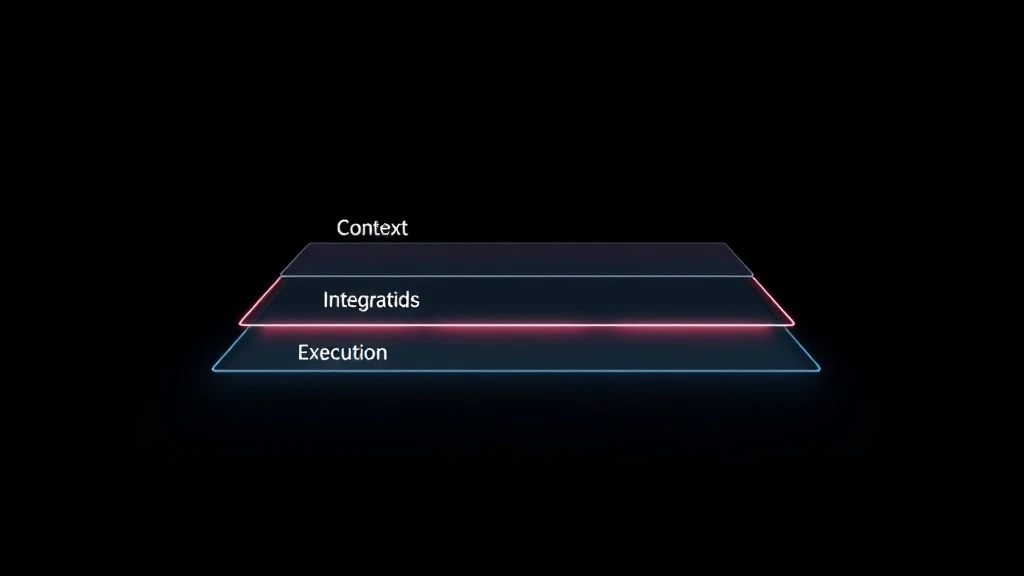
The workspace model defines four layers that compose into a complete agent environment:
Context Layer -- CLAUDE.md plus context files that give the agent domain knowledge and behavioral constraints.
Command Layer -- Slash commands and scripts that define reusable workflows and entry points.
Integration Layer -- MCP servers and CLI tools that extend the agent's capabilities to external services.
Execution Layer -- File operations, shell commands, and tool calls where the agent actually does work.
Seventy Workspaces and Counting
The repository catalogs 70 workspace concepts across categories like media processing, data analytics, content creation, DevOps, research, business operations, personal development, education, creative projects, and home management. Seven are already implemented as real repositories, including a Linux desktop manager, a LAN/homelab manager, a Conda environment manager, and a security auditor.
The conceptual workspaces demonstrate the breadth of what this pattern enables: a garden planner workspace, a language learning workspace, a client project manager, a 3D printing workspace, a personal fitness tracker -- all following the same canonical structure but with domain-specific context, commands, and integrations.
Beyond Claude
While the model is demonstrated with Claude Code, the documentation explicitly addresses portability. The fundamental pattern -- AI agent CLI plus structured repository equals domain-specific agent workspace -- works with any AI CLI that supports context files and tool execution. The portability documentation covers adaptation to Aider, Continue, Goose, and other tools. The agentic entry point (manifest.json) and validation schema (schema.json) mean that an agent pointed at this repository has everything it needs to scaffold, validate, or operate within a workspace.