
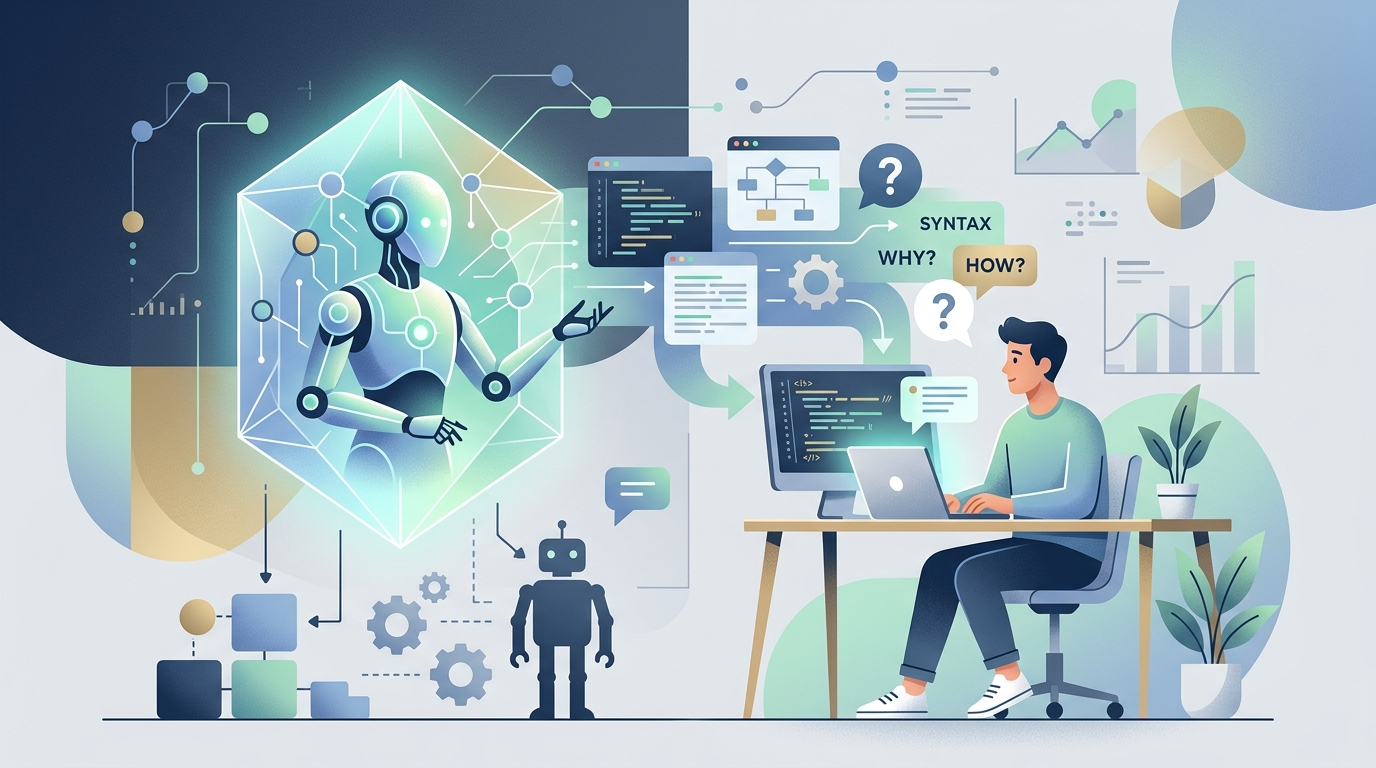
Code Tutor Agent Model: using AI as a code tutor, not just a code monkey
Exploring the idea of using AI code generation tools not just to write code, but as structured tutors that teach you what they did and why.
One of the things that bugs me about the current "vibe coding" discourse is how binary it is. Either you're fully on board with letting AI write all your code, or you think it's creating a generation of unemployable developers. I think there's a much more interesting middle ground, and I've been working on a project that tries to occupy it.
The problem with pure vibe coding
A recent Hacker Noon article made some excellent points about the risks of blindly brute-forcing your way to functional applications using agentic code generation tools. When it goes wrong, vibe coding yields sucky codebases and circuitous debugging processes. We've all been there. But the deeper risk is strategic: if you're just an intermediary between an LLM and a company, that's not a durable career position.
The idea: AI as educational conduit
My Code Tutor Agent Model flips the script. Instead of just having AI do the work, the system is designed around the principle of do the thing, then teach me how you did it. It's education in reverse: rather than learn and then do, we do first and learn afterwards.
The framework uses a multi-agent architecture with two groups. The "Doers" handle the actual code generation, planning, and debugging. The "Educators" are a chain of agents: a Curriculum Writer that maps what skills were exercised during a session, a Lesson Writer that creates personalized learning materials using your actual code as teaching examples, a Session Summary Agent that records what happened, and a Teacher that delivers interactive lessons.
Why I think this matters
AI code generation tools know more than most of us about most coding topics. That makes them potential educators, not just code monkeys. The paradox of AI is that it can help you level up your skills, but often in a roundabout way that requires your own oversight and correction. As these tools get better, their instructional potential becomes more pronounced.
Rather than fencing human intelligence out of the picture, this approach tries to use AI as a bridge for upskilling: encouraging people without a coding background to take their first steps, and helping those already proficient to push further.
The project is open source and can be implemented with Claude Code or other agentic frameworks. Check it out on GitHub.
Basic config/idea for an AI agent(s) to guide rather than "do"