
Panel of Claudes: multi-perspective AI analysis through expert panels
An experimental multi-agent system that simulates expert panel discussions, analyzing complex topics through multiple analytical lenses.
Traditional debate formats force complex topics into binary frames — pro versus con, for or against. But real-world decision-making almost never works that way. You need to understand how different stakeholders view an issue, what trade-offs exist between competing values, and which dimensions of a problem you haven't even considered yet. That's the thinking behind Panel of Claudes.
How it works
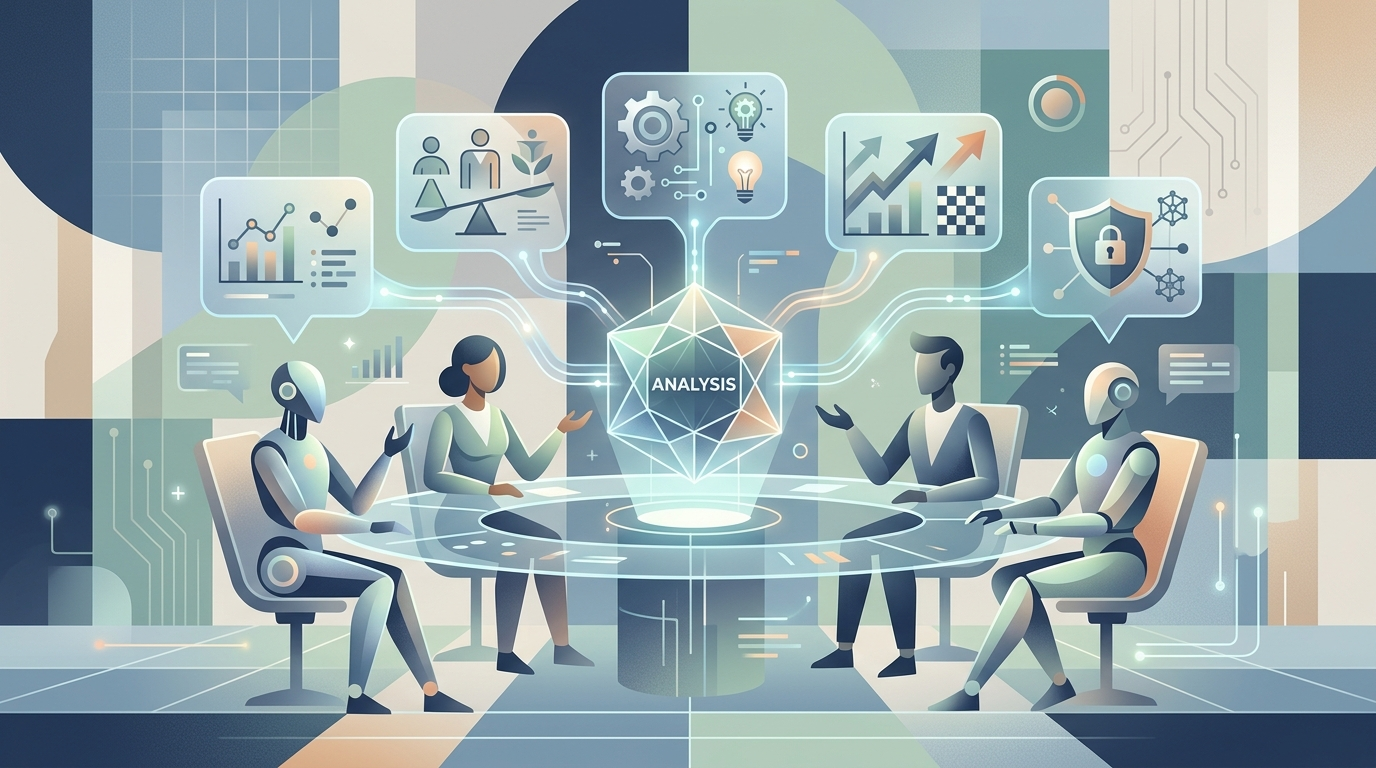
Panel of Claudes is a multi-agent system that simulates expert panel discussions. You submit a complex question or motion, and the system assembles a panel of AI agents — each looking at the topic through a different analytical lens. An economist, an ethicist, a scientist, a policy analyst — each bringing their own framework to bear on the same question.
danielrosehill/Panel-Of-Claude View on GitHubThe process runs through multiple rounds. First, a decomposition agent breaks the motion into its core components. Then each perspective agent independently analyzes the topic in depth. An interim synthesis agent identifies tensions and convergences, then sends targeted questions back to each panelist. In the second round, perspectives respond to each other and refine their analyses. Finally, a moderator weaves everything into a comprehensive synthesis.
The perspective lens library
The system includes a library of analytical lenses organized into categories: core perspectives (economic, ethical, scientific, environmental), academic perspectives (historical, philosophical, sociological), business perspectives (financial, strategic, operational), and policy perspectives (legal, implementation, risk management). You can select specific lenses, let the system auto-select based on the topic, or define entirely custom analytical frameworks.
Multiple output formats
Outputs come in machine-readable JSON, markdown reports, PDF and ePub documents, and even podcast-style audio via TTS. The audio format is particularly interesting — it turns the multi-perspective analysis into a listenable "think tank" discussion.
I've been using this for strategic decision-making, policy analysis, and just exploring complex topics where I want to escape my own cognitive biases. The result isn't about any single perspective "winning" — it's about achieving a richer, multi-dimensional understanding of whatever you're grappling with.